
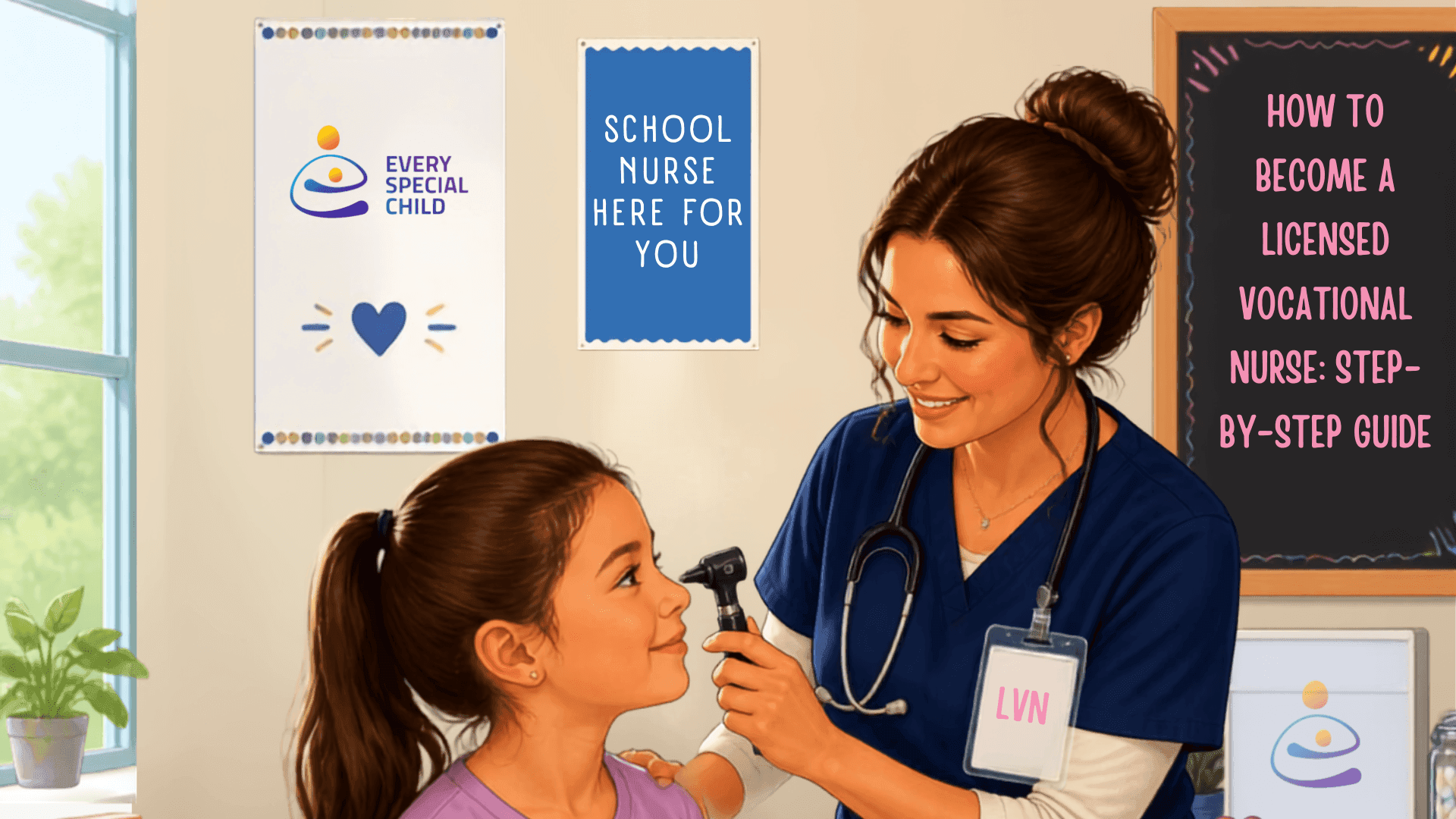
How to Become a Licensed Vocational Nurse: Step-by-Step Guide
Become a Licensed Vocational Nurse. Dreaming of a career where you can make a real difference every day? Your ideal career path might be to become a Licensed Vocational Nurse (LVN).. LVNs are the backbone of patient care—providing comfort, administering medication, and supporting both patients and medical teams. Apply Now.
In this guide, we’ll walk you through each step to becoming an LVN, from education to certification, so you can start your nursing journey with confidence.
Understanding the Role of a Licensed Vocational Nurse
What Does an LVN Do?
Become a Licensed Vocational Nurse provide essential nursing care under the supervision of doctors and registered nurses. Their daily tasks include:
- Monitoring patients’ vital signs
- Administering medication
- Assisting with personal hygiene
- Recording patient information
Where Do LVNs Work?
LVNs work in various healthcare environments, such as:
- Hospitals
- Nursing homes
- Rehabilitation centers
- Private clinics
- Home health care settings
LVN vs RN: What’s the Difference?
While both LVNs and RNs provide patient care, RNs have more advanced training and responsibilities. The LVN role is perfect for those seeking a quicker entry into nursing with opportunities to advance later. Read More Articles.
Step-by-Step Guide to Become a Licensed Vocational Nurse
Step 1 – Complete High School or GED
Before you can apply for an LVN program, you’ll need a high school diploma or GED. Anatomy, chemistry, and biology classes can provide you with a solid foundation.
Step 2 – Enroll in an Approved LVN Program
Find a state-approved LVN training program, typically offered at community colleges, vocational schools, or technical institutes.
Duration: Usually 12–18 months
Curriculum Includes:
- Anatomy & physiology
- Nursing fundamentals
- Pharmacology
- Clinical practice
Hands-on training is crucial, helping you apply classroom learning in real healthcare settings.
Step 3 – Gain Hands-On Experience
During your training, you’ll complete clinical rotations in hospitals or care centers. This experience helps you:
- Build confidence in patient care
- Understand teamwork in healthcare
- Develop problem-solving and observation skills
Step 4 – Apply for Licensure
Once you’ve completed your program, the next step is applying to your state board of nursing for permission to take the licensing exam.
You’ll need to submit:
- Transcripts
- Proof of training
- Identification documents
- Application fees
Step 5 – Pass the NCLEX-PN Exam
The National Council Licensure Examination for Practical Nurses (NCLEX-PN) is a must for becoming an LVN.
What’s on the Exam:
- Safety and infection control
- Health promotion and maintenance
- Psychosocial integrity
- Pharmacological therapies
Study Tips:
- Use NCLEX practice tests
- Study a little every day
- Join online study groups
Passing the NCLEX-PN officially qualifies you for licensure.
Step 6 – Obtain State Licensure
Become a Licensed Vocational Nurse After passing your exam, you’ll receive your state-issued LVN license. Keep track of renewal requirements to stay active in your nursing career.
Step 7 – Start Working as an LVN
Become a Licensed Vocational Nurse With your license in hand, you can start working in hospitals, clinics, nursing homes, or home health agencies. Entry-level positions offer invaluable experience to grow your nursing skills. Continuous learning is key—professionals must stay updated on inclusive teaching strategies, assistive technologies, and behavioral intervention techniques. See More
Educational Pathways and Specializations
Bridge Programs for LVNs
If you want to advance your career, consider LVN-to-RN bridge programs. These allow LVNs to become Registered Nurses in as little as 1–2 years while working part-time.
Specialized Areas for LVNs
LVNs can specialize in:
- Pediatrics – caring for children
- Geriatrics—supporting elderly patients
- Mental health—assisting patients with emotional or psychological needs
Salary and Job Outlook
According to the U.S. Bureau of Labor Statistics, the average salary for LVNs is around $50,000–$60,000 per year, depending on location and experience.
Top-paying states include:
- California
- Texas
- Massachusetts
- Washington
The demand for LVNs continues to grow as the population ages, ensuring a stable and rewarding career path.
Skills Every LVN Should Have
- Empathy: Understanding patient emotions builds trust.
- Communication: Clear interactions ensure accurate care.
- Technical skills: Administering injections and using medical equipment efficiently.
- Organization: Managing multiple patients effectively.
Challenges and Rewards of Being an LVN
Being an LVN isn’t always easy—long shifts, emotional moments, and physical demands can be challenging.
But the rewards? Seeing patients recover, forming meaningful connections, and knowing you make a difference daily.
Continuing Education and License Renewal
To keep your license active, most states require continuing education (CE) hours.
These may include workshops, online courses, or advanced certifications—helping you stay updated with new healthcare practices.
FAQs
- How long does it take to become an LVN?
It usually takes 12 to 18 months to complete an LVN program and earn your license. - Is the LVN exam difficult?
It’s challenging but manageable with proper preparation and consistent study habits. - Can LVNs work in hospitals?
Yes, LVNs are employed in hospitals, nursing homes, clinics, and home healthcare agencies. - What are the best states for LVN jobs?
California, Texas, and Florida have the highest demand for LVNs with competitive pay. - Can LVNs specialize in certain areas?
Absolutely! LVNs can specialize in pediatrics, geriatrics, rehabilitation, or mental health.

Comments (…)