
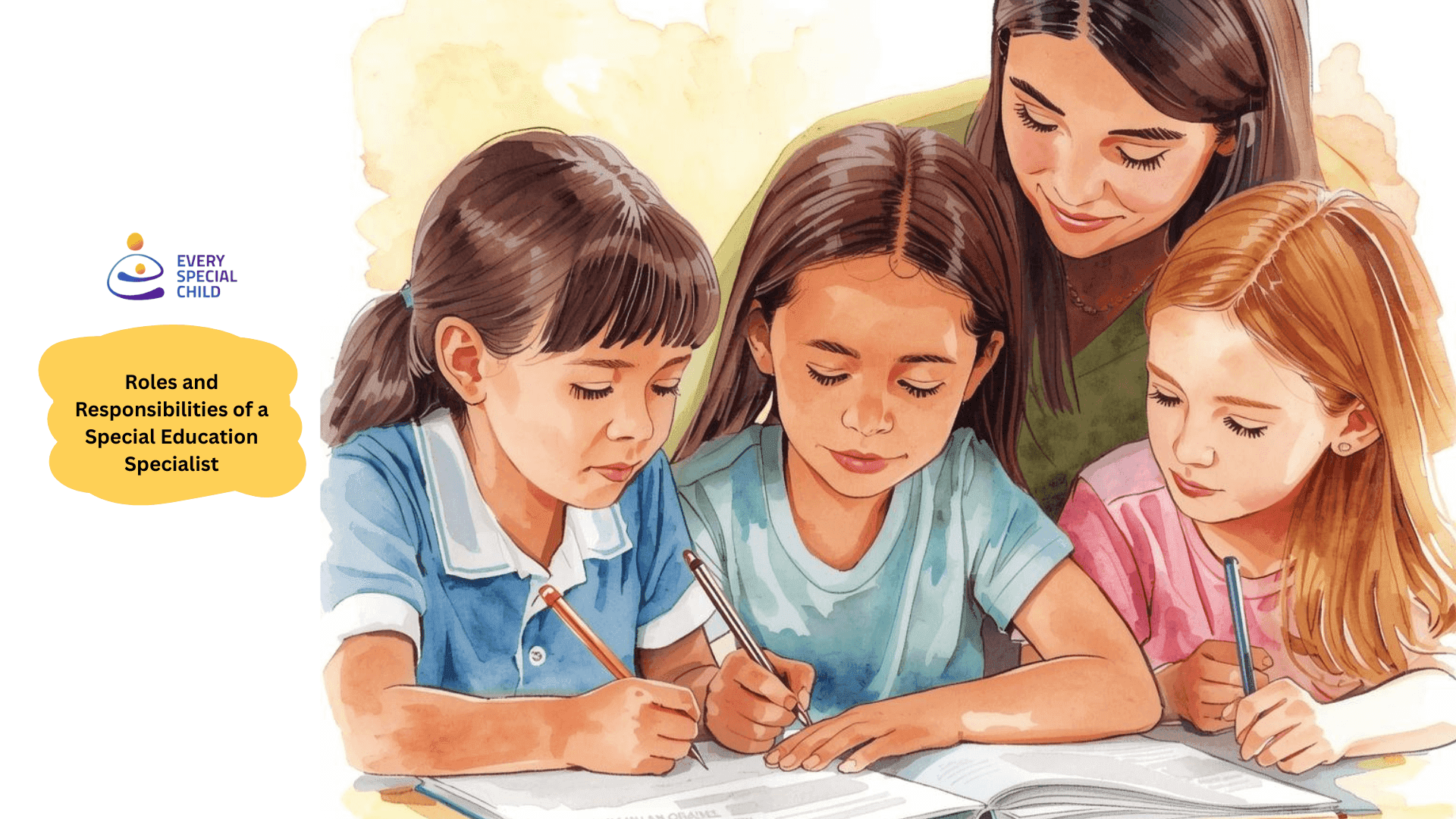
Roles and Responsibilities of a Special Education Specialist: A Complete U.S. Career & Classroom Guide
Explore the roles and responsibilities of a special education specialist, including classroom support, IEP planning, collaboration, and career pathways across U.S. schools.
The roles and responsibilities of a Special Education Specialist go far beyond teaching lessons—they shape futures, empower families, and ensure equal access to education for millions of students across the United States.
For parents seeking clarity, educators pursuing collaboration, or professionals exploring a meaningful career, understanding the roles and responsibilities of a Special Education Specialist is essential in today’s inclusive learning environment.
This guide breaks down exactly what special education specialists do, why their role matters, and how they make a life-changing impact in U.S. schools.
Quick Apply: Send Every Special Child an interest form to find out more about Special Education Specialist openings and start your career sooner than before. Apply Now
Why the Roles and Responsibilities of a Special Education Specialist Matter
Every child should receive an education tailored to their own needs. The responsibilities of a Special Education Specialist exist to ensure students with disabilities are not left behind but instead supported, understood, and empowered.
In the U.S., federal laws such as the Individuals with Disabilities Education Act (IDEA) require schools to provide tailored educational services. Special education specialists are the professionals who turn those legal requirements into real, effective learning experiences. See More Other Articles.
Core Roles and Responsibilities of a Special Education Specialist
The roles and responsibilities of a Special Education Specialist are multifaceted, requiring expertise, compassion, and collaboration.
1. Developing Individualized Education Programs (IEPs)
One of the most critical roles and responsibilities of a Special Education Specialist is creating and managing Individualized Education Programs (IEPs). These personalized plans outline:
- Academic goals
- Behavioral strategies
- Accommodations and modifications
- Support services
Each IEP is designed to meet a student’s unique learning needs while complying with U.S. education laws.
2. Assessing Student Needs and Progress
Another essential part of the roles and responsibilities of a Special Education Specialist is assessment strategies:
- Conduct academic and behavioral evaluations
- Analyze student data
- Track progress toward IEP goals
- Adjust instructional strategies as needed
Data-driven decision-making ensures students receive effective and timely support.
3. Providing Specialized Instruction and Interventions
The roles and responsibilities of a Special Education Specialist include delivering targeted instruction that adapts the curriculum for diverse learning styles.
This may involve:
- Small-group or one-on-one instruction
- Differentiated teaching methods
- Assistive technology
- Behavioral intervention strategies
Their goal is to help students access the same curriculum as their peers in meaningful ways.
4. Collaborating With Teachers, Parents, and Support Teams
Collaboration is central to the roles and responsibilities of a Special Education Specialist. These professionals work closely with:
- General education teachers
- School psychologists
- Speech and occupational therapists
- Parents and caregivers
- School administrators
Clear communication ensures consistency and success both inside and outside the classroom.
5. Supporting Behavioral and Emotional Development
Beyond academics, the roles and responsibilities of a Special Education Specialist include addressing social, emotional, and behavioral challenges.
Specialists help students:
- Develop self-regulation skills
- Improve social interactions
- Build confidence and independence
- Manage emotional challenges in school settings
For many students, this support is life-changing.
6. Ensuring Legal Compliance and Advocacy
A critical but often overlooked part of the roles and responsibilities of a Special Education Specialist is legal compliance.
They ensure schools meet:
- IDEA requirements
- Section 504 guidelines
- State and federal education regulations
Special education specialists also act as advocates, ensuring students receive the services they are legally entitled to.
Where Special Education Specialists Apply Their Responsibilities
Understanding the roles and responsibilities of a Special Education Specialist also means knowing where they work in the U.S.
They are employed in:
- Public and private schools
- Early intervention programs
- Special education classrooms
- Charter schools
- Residential and therapeutic programs
Their responsibilities adapt to the setting, but the mission remains the same—student success. See More
Skills That Support the Roles and Responsibilities of a Special Education Specialist
To perform the roles and responsibilities of a Special Education Specialist effectively, professionals need a strong skill set.
Key Skills Include:
- Empathy and patience
- Strong communication
- Behavioral management expertise
- Data analysis and documentation
- Problem-solving and adaptability
- Knowledge of special education law
These skills allow specialists to support students holistically.
Career Outlook and Demand in the United States
The roles and responsibilities of a Special Education Specialist are increasingly vital due to rising student needs and nationwide teacher shortages.
In the U.S., special education specialists benefit from:
- High job demand
- Long-term career stability
- Opportunities for advancement
- Meaningful, purpose-driven work
This makes special education one of the most impactful careers in education today.
Roles and Responsibilities of a Special Education Specialist vs. Special Education Teacher
While similar, the roles and responsibilities of a Special Education Specialist often involve deeper expertise than those of a general special education teacher.
Specialists may focus more on:
- Program development
- Advanced assessments
- Compliance oversight
- Behavioral intervention planning
Their role complements teaching while adding specialized leadership.
FAQs:
What are the primary roles and responsibilities of a Special Education Specialist?
They include creating IEPs, assessing student needs, providing specialized instruction, collaborating with families, and ensuring legal compliance.
Are the roles and responsibilities of a Special Education Specialist different in the U.S.?
Yes. U.S. specialists must follow federal laws such as IDEA and state-specific education regulations.
Do Special Education Specialists work directly with students?
Yes. A major part of the roles and responsibilities of a Special Education Specialist involves direct instruction and intervention.
Is special education a good career choice in the U.S.?
Absolutely. The field offers job stability, strong demand, and the opportunity to make a lasting difference.
What abilities are necessary to carry out the duties and obligations of a special education specialist?
Empathy, communication, behavioral expertise, collaboration, and legal knowledge are essential.
Final Thoughts: Understanding the Roles and Responsibilities of a Special Education Specialist
The roles and responsibilities of a Special Education Specialist are foundational to inclusive education in the United States. These professionals ensure students with disabilities are supported, empowered, and allowed to thrive.
Whether you’re a parent, educator, or future specialist, understanding these roles provides clarity, confidence, and appreciation for one of the most impactful professions in education.
Quick Apply: Send Every Special Child an interest form to find out more about Special Education Specialist openings and start your career sooner than before. Apply Now

Comments (…)