
Explore Early Childhood Teacher Assignments in California for Educators Supporting Young Learners With Diverse Needs
Choosing the right early childhood teaching role can shape both a child’s first school experience and an educator’s long-term career path. Early Childhood Teacher assignments in California may include preschool special education classrooms, inclusive early learning programs, developmental support settings, and other roles designed to help young children build communication, social, academic, motor, and independence skills. For educators interested in Early Childhood Special Education jobs, ECSE Teacher jobs in California, or early intervention teaching jobs, understanding the different assignment types, responsibilities, qualifications, and classroom expectations can make it easier to find a position that matches your strengths and professional goals.
What Are Early Childhood Teacher Assignments in California?
Early Childhood Teacher assignments in California can vary widely depending on the school district, preschool program, student population, and service model.
Some teachers work in self-contained special education classrooms, while others support inclusive preschool programs where children with and without disabilities learn together.
Assignments may include:
- Early Childhood Special Education classrooms
- Preschool special education programs
- Inclusive preschool settings
- Developmental learning programs
- Early intervention classrooms
- Itinerant or consultation-based services
- Transition programs for children entering kindergarten
The exact title used by an employer may differ, so candidates should read job descriptions carefully rather than relying only on the position name.
Why Early Childhood Special Education Jobs Matter
The early years are a critical period for learning, communication, social development, and independence.
Professionals working in Early Childhood Special Education jobs may support children who need help with:
- Communication
- Social interaction
- Behavior regulation
- Fine and gross motor development
- Pre-academic skills
- Self-care
- Attention and engagement
- Classroom routines
The work can be especially meaningful because teachers often help children build foundational skills that support later success in school.
Early childhood special educators also work closely with families, making communication and collaboration an important part of the role.
Common ECSE Teacher Jobs California Schools May Offer
Teachers exploring ECSE Teacher jobs in California may encounter several types of assignments.
Self-Contained ECSE Classroom
In a self-contained setting, the majority of students may receive special education services.
Teachers may provide highly individualized instruction, visual supports, communication strategies, and structured routines.
These classrooms often include support from paraprofessionals and related-service professionals.
Inclusive Preschool Classroom
Inclusive settings may include students with and without disabilities.
The teacher may adapt activities so that all students can participate meaningfully.
This type of assignment often emphasizes:
- Universal Design for Learning
- Differentiated instruction
- Peer interaction
- Social-emotional development
- Classroom accessibility
Itinerant ECSE Services
Some teachers travel between classrooms or sites to support individual students.
This type of position may involve collaboration with general education preschool teachers, families, and service providers.
Developmental or Early Intervention Programs
Some assignments focus on children who need targeted developmental support before or during preschool.
These early intervention teaching jobs may involve individualized instruction and close collaboration with multidisciplinary teams.
What Does an ECSE Teacher Do?
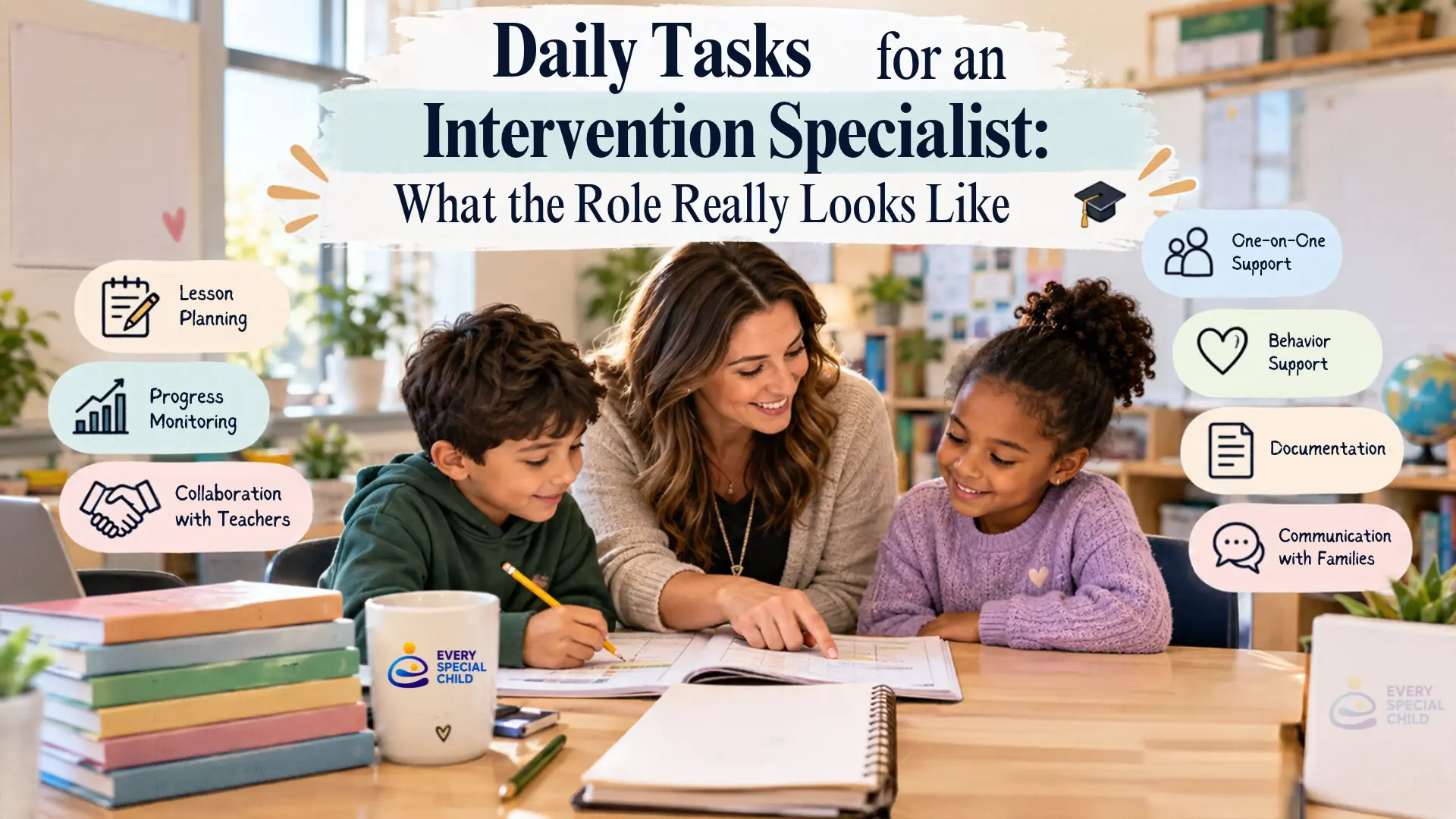
Daily responsibilities vary, but teachers in early childhood special education often balance instruction, assessment, communication, documentation, and collaboration.
Common responsibilities may include:
- Developing and implementing IEP goals
- Planning developmentally appropriate lessons
- Supporting communication development
- Teaching social-emotional skills
- Collecting progress data
- Adapting classroom activities
- Participating in IEP meetings
- Communicating with families
- Collaborating with therapists and specialists
- Supporting transitions between activities
- Supervising or coordinating paraprofessional support
- Maintaining required documentation
Strong organization is important because teachers may be managing many individualized goals at once.
Preschool Special Education Teacher Jobs: What the Classroom May Look Like
Professionals looking to work as preschool special education teachers can anticipate a highly regimented yet play-based learning environment.
Young children often learn best through hands-on activities, movement, repetition, and social interaction.
A typical classroom may include:
- Circle time
- Learning centers
- Sensory play
- Early literacy activities
- Fine-motor tasks
- Gross-motor activities
- Communication practice
- Social skills instruction
- Snack or mealtime routines
- Structured transitions
Teachers may use visuals, songs, manipulatives, movement, and assistive technology to support participation.
Skills Needed for Early Childhood Teacher Assignments in California
Successful early childhood special education teachers need a mix of instructional knowledge, patience, creativity, and communication skills.
Understanding Child Development
Teachers should understand typical and atypical early childhood development.
This helps them select age-appropriate goals and recognize when additional support may be needed.
IEP Knowledge
Many ECSE teachers are responsible for helping develop, implement, and monitor Individualized Education Programs.
Strong IEP skills include:
- Writing measurable goals
- Documenting present levels
- Monitoring progress
- Implementing accommodations
- Participating in team meetings
Communication Support
Some young learners may use limited spoken language or alternative communication systems.
Teachers may collaborate with speech-language pathologists to support:
- Picture communication
- AAC devices
- Gestures
- Visual choices
- Early language development
Behavior and Emotional Regulation
Young children could require assistance in learning how to:
- Wait
- Transition
- Share
- Request help
- Manage frustration
- Participate in group activities
Teachers frequently employ predictable routines, first-then supports, visual schedules, and positive reinforcement.
Early Intervention Teaching Jobs and Family Collaboration
Family involvement is especially important in early childhood education.
Professionals in early intervention teaching jobs may communicate regularly with parents and caregivers about:
- Student progress
- Classroom routines
- Communication strategies
- Behavior support
- Developmental goals
- Transition planning
Families can provide important information about how children communicate, play, and respond at home.
A strong teacher-family partnership can make support more consistent across settings.
ECSE Assignments California: Multidisciplinary Collaboration
In California schools, a lot of ECSE assignments call for close collaboration.
Teachers may work with:
- Speech-language pathologists
- Occupational therapists
- Physical therapists
- School psychologists
- Behavior specialists
- Nurses
- Paraprofessionals
- Administrators
- General education preschool teachers
- Families
Working together makes it possible to guarantee that students receive coordinated assistance.
For example, a speech-language pathologist may recommend communication strategies that the teacher can reinforce during classroom activities.
An occupational therapist may suggest adaptations for fine-motor or sensory needs.
Qualifications for ECSE Teacher Jobs in California
Qualifications vary by employer and assignment.
Candidates may need:
- A bachelor’s degree
- Appropriate California teaching credential or authorization
- Early childhood or special education preparation
- Background clearance
- Required state documentation
Some employers may also prefer experience with:
- Preschool-age students
- IEPs
- Autism support
- AAC
- Behavior strategies
- Inclusive education
- Family collaboration
Candidates should verify the exact requirements for each position before applying.
Early Childhood Education Careers California Educators Can Build
Professionals in California who work in early childhood education have a variety of employment options.
Teachers may begin in preschool special education and later move into:
- Lead teacher roles
- Program coordination
- Special education leadership
- Early intervention
- Instructional coaching
- Behavior support
- Family services
- Curriculum development
- Administration
Experience in early childhood special education can also help educators build strong skills in communication, assessment, collaboration, and individualized instruction.
How to Find Early Childhood Teacher Assignments in California
Candidates should search using multiple job titles because employers may use different terminology.
Helpful search terms include:
- Early Childhood Teacher assignments in California
- Early Childhood Special Education jobs
- ECSE Teacher jobs California
- preschool special education teacher jobs
- early intervention teaching jobs
- ECSE assignments California
- early childhood education careers California
Search through:
- School district career pages
- Education job boards
- Special education staffing organizations
- Early childhood organizations
- State and regional education platforms
- Professional networking websites
Review every job description carefully.
Two positions with similar titles may involve very different age groups, schedules, caseloads, and responsibilities.
What to Ask Before Accepting an Early Childhood Teacher Assignment in California
Before accepting a role, ask detailed questions about the classroom.
What Is the Student Age Range?
Preschool programs may serve different age groups.
What Is the Classroom Size?
Ask how many students are enrolled and how support is structured.
Are Paraprofessionals Available?
Support staff can be important in classrooms with individualized needs.
What Related Services Are Available?
Enquire about the availability of behaviour specialists, psychologists, OTs, PTs, and SLPs.
What Are the IEP Responsibilities?
Clarify case management expectations, meeting schedules, and progress reporting.
Is the Classroom Inclusive or Self-Contained?
You can assess whether the task aligns with your experience by comprehending the model.
Frequently Asked Questions
1. What are the assignments for Early Childhood Teachers in California?
Early Childhood Teacher assignments in California are roles focused on educating young children, including preschool special education, inclusive early learning, developmental support, and early intervention settings.
2. What do Early Childhood Special Education jobs involve?
Early Childhood Teacher assignments in California may include IEP development, play-based instruction, communication support, behavior strategies, progress monitoring, family communication, and collaboration with related-service providers.
3. What qualifications are needed for ECSE Teacher jobs California schools offer?
Requirements for ECSE Teacher jobs in California vary by employer, but may include a degree, appropriate teaching credential or authorization, early childhood or special education training, and background clearance.
4. Are preschool special education teacher jobs different from general preschool jobs?
Yes. Preschool special education teacher jobs often involve more individualized instruction, IEP responsibilities, data collection, collaboration with specialists, and support for children with disabilities or developmental needs.
5. What are early intervention teaching jobs?
The goal of early intervention teaching positions is to support the development of young children. fundamental abilities in domains such as early learning, behavior, physical development, social interaction, and communication.
6. What should I look for in ECSE assignments California schools offer?
When reviewing ECSE assignments in California, consider classroom size, student needs, age group, paraprofessional support, related services, IEP responsibilities, and whether the setting is inclusive or self-contained.
7. Are early childhood education careers California teachers pursue good for long-term growth?
Yes. Early Childhood Teacher assignments in California professionals pursue can lead to opportunities in special education leadership, early intervention, program coordination, coaching, family services, and administration.
Conclusion:
For educators who enjoy helping young learners build foundational skills, Early Childhood Teacher assignments in California can provide meaningful and professionally rewarding opportunities.
These roles allow teachers to support communication, social-emotional development, early academics, independence, and classroom participation during an important stage of childhood.
Whether you are exploring Early Childhood Special Education jobs, ECSE Teacher jobs in California, preschool special education teacher jobs, or early intervention teaching jobs, focus on positions that align with your credentials, experience, preferred age group, and teaching style.
Ask about classroom structure, support staff, IEP expectations, related services, and family collaboration before accepting an assignment.
The right early childhood position can help you grow as an educator while letting you make a lasting difference in a child’s earliest years of education.

Comments (…)