Current Opportunities for Special Education Teachers in California: Age-Appropriate Resources and Support
Discover how age-appropriate resources and support help California Special Education Teachers create inclusive classrooms, meet IEP goals, and build rewarding teaching careers.
Imagine a high school student who struggles with basic reading but wants to learn about careers, technology, and everyday life. Giving that student preschool-level worksheets may simplify the lesson, but it can also overlook their age, interests, and dignity. Apply Now
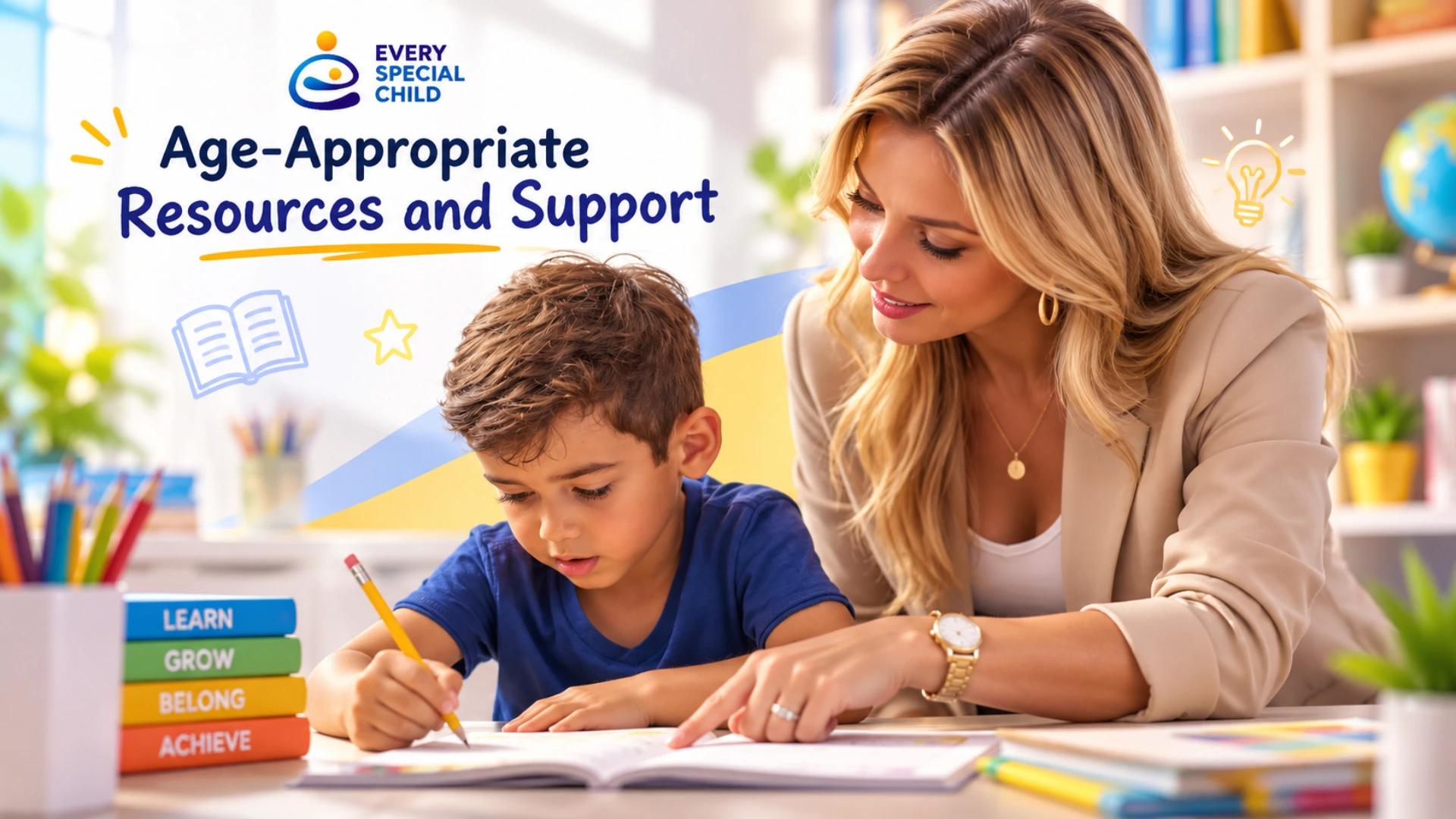
This is why Age-appropriate resources and support are essential in special education classrooms.
Across California, Special Education Teachers support students with diverse learning abilities, communication needs, and developmental differences. Their responsibility goes beyond delivering lessons. They create meaningful learning experiences that respect each student’s chronological age while addressing individual educational needs.
For educators exploring Special Education Teacher jobs in California, understanding how to select age-appropriate special education resources, differentiate instruction, and provide individualized classroom support is an important professional skill.
Why Age-appropriate resources and support Matter in Special Education
Every student deserves an education that respects their abilities, interests, and personal development.
Students receiving special education services may demonstrate different academic, communication, social, and functional skills. However, a student’s instructional level should not automatically determine the appearance or subject matter of their learning materials.
For example, a teenager learning basic mathematics may benefit more from calculating grocery prices than counting cartoon animals.
Effective Age-appropriate resources and support help teachers:
- Maintain student dignity and confidence.
- Support Individualized Education Program (IEP) goals.
- Encourage independence and self-advocacy.
- Improve accessibility and classroom participation.
- Connect academic instruction with practical experiences.
- Create meaningful opportunities for inclusive learning.
These approaches are particularly valuable in California classrooms serving students with mild to moderate or extensive support needs. See More Other
What Are Age-Appropriate Special Education Resources?
Age-appropriate special education resources are educational materials, assistive tools, and instructional activities designed around students’ ages, interests, abilities, and individual learning goals.
They allow teachers to adjust instructional difficulty without making materials unnecessarily childish.
Common examples include:
- Adapted reading passages and accessible books.
- Visual schedules and communication boards.
- Graphic organizers and modified worksheets.
- Functional mathematics and literacy activities.
- Augmentative and alternative communication (AAC) tools.
- Assistive technology and accessible digital materials.
- Social-emotional learning and self-advocacy activities.
The objective is not simply to make assignments easier. It is to remove learning barriers while maintaining relevant and respectful instruction.
Age-Appropriate Learning Activities for Different Grade Levels
Selecting age-appropriate learning activities requires educators to consider both developmental readiness and chronological age.
Elementary School Students
Elementary learners often benefit from hands-on instruction, structured routines, and interactive activities.
Teachers may use picture-supported reading, counting manipulatives, phonics games, visual schedules, and social-emotional learning exercises.
These developmental learning resources can strengthen foundational skills while encouraging curiosity, communication, and confidence.
Middle School Students
Middle school learners frequently need materials that reflect growing independence and changing interests.
Effective activities include adapted nonfiction articles, practical mathematics, organizational checklists, collaborative projects, and social problem-solving scenarios.
Teachers should select age-respectful topics even when students require foundational academic instruction.
High School Students
High school special education programs may emphasize academic progress, independent living, career preparation, and transition planning.
Useful activities include:
- Completing job applications and practicing interviews.
- Reading transportation schedules.
- Budgeting and comparing prices.
- Understanding workplace communication.
- Practicing self-advocacy and decision-making.
These experiences connect classroom learning with skills students may use after graduation.
Differentiated Instruction Resources for California Classrooms
Not every student learns through the same instructional method.
Differentiated instruction resources allow Special Education Teachers to modify how students access information, demonstrate understanding, and participate in activities.
For example, a student who understands a science concept but struggles with handwriting might benefit from speech-to-text technology instead of a simplified assignment.
Teachers can differentiate instruction through:
- Adjusted reading levels and vocabulary.
- Visual instructions and step-by-step guides.
- Alternative response formats.
- Flexible pacing and additional practice.
- Graphic organizers and hands-on materials.
- Accessible assessments and assistive technology.
Combining differentiated instruction with Age-appropriate resources and support helps teachers address individual needs without unnecessarily reducing academic expectations.
Adaptive Learning Resources and Assistive Technology
Technology can expand educational access for students with disabilities when selected for a clear instructional purpose.
Adaptive learning resources include digital and physical tools that address communication, reading, writing, movement, and information-processing barriers.
Reading and Writing Supports
Text-to-speech tools, audiobooks, enlarged text, alternative keyboards, word banks, and speech-to-text applications can help students participate in academic activities.
Communication Supports
AAC devices, communication boards, and visual communication applications can support students who have difficulty expressing themselves through speech.
Vocabulary should reflect a student’s age, daily experiences, interests, and communication goals.
Mathematics and Functional Learning
Number lines, calculators, visual models, manipulatives, and practical money activities can make mathematical concepts more accessible.
When implementing Age-appropriate resources and support, teachers should evaluate accessibility, student preferences, instructional value, and privacy requirements.
How Teachers Can Develop Respectful Learning Materials
One of the biggest challenges in special education is matching instructional difficulty with age-appropriate presentation.
A high school student reading at an elementary level may need simplified sentences, but the material can still discuss sports, music, careers, technology, or community experiences.
Teachers can adapt reading complexity, vocabulary, response formats, and visual supports while maintaining mature imagery and relevant topics.
Effective developmental learning resources recognize that academic ability, communication skills, emotional development, and chronological age are different dimensions of a student’s learning profile.
Individualization should be guided by student needs, strengths, and IEP goals rather than assumptions based on a disability label.
Special Needs Classroom Support Beyond Worksheets
Meaningful special needs classroom support involves more than instructional materials.
Predictable schedules, positive reinforcement, structured choices, accessible classroom layouts, and appropriate sensory accommodations can help students engage with instruction.
Collaboration is equally important.
Special Education Teachers may work alongside speech-language pathologists, occupational therapists, school psychologists, paraprofessionals, families, and other specialists.
These partnerships help educators understand student needs and coordinate appropriate interventions.
Students should also have opportunities to communicate which learning formats and activities work best for them.
Current Career Opportunities for Special Education Teachers in California
California offers different professional pathways for educators interested in supporting students with disabilities.
Potential employment settings include public school districts, charter schools, specialized educational programs, and school-based staffing assignments.
Special Education Teacher positions may involve:
- Mild to Moderate Support Needs: Providing individualized academic instruction and accommodations.
- Extensive Support Needs: Supporting students who require substantial individualized educational assistance.
- Resource Specialist Programs: Helping eligible students access general education instruction and specialized services.
- Transition-Focused Programs: Teaching functional academics, independent living skills, and employment readiness.
Job responsibilities, eligibility requirements, and openings vary by employer and location.
California educators should review the California Commission on Teacher Credentialing requirements for the appropriate Education Specialist credential and authorization.
For candidates exploring current vacancies, school district career websites and reputable education staffing organizations are useful starting points.
Strong experience with IEP implementation, classroom collaboration, differentiated instruction, and Age-appropriate resources and support can help candidates demonstrate practical readiness during interviews. See More
How to Evaluate Age-appropriate resources and support
Before introducing a new classroom resource, Special Education Teachers should consider six essential questions:
- Age: Does the material respect the student’s chronological age?
- Accessibility: Can the student meaningfully participate?
- IEP Alignment: Does it support an identified learning goal?
- Relevance: Does it connect with the student’s interests?
- Independence: Does it encourage appropriate self-direction?
- Flexibility: Can it be adapted as the student’s needs change?
Regular observation, student feedback, and progress monitoring help teachers determine whether a resource remains effective.
Frequently Asked Questions (FAQs)
1. What are Age-appropriate resources and support in special education?
Age-appropriate resources and support include educational materials, teaching strategies, communication tools, and classroom accommodations that address students’ individual needs while respecting their chronological age, interests, and dignity.
2. What are the best age-appropriate special education resources for students?
Useful resources include adapted reading passages, visual schedules, assistive technology, communication boards, accessible digital activities, graphic organizers, and real-world learning materials. The most suitable choice depends on each student’s needs and IEP goals.
3. How do differentiated instruction resources help Special Education Teachers?
Differentiated instruction resources help educators adjust instructional delivery, reading complexity, assignment formats, pacing, and student response options. These adjustments can improve access while preserving meaningful learning expectations.
4. What are examples of age-appropriate learning activities for high school students?
High school students may benefit from job interview practice, transportation planning, budgeting, reading workplace instructions, completing applications, and developing self-advocacy skills. Activities should be individualized according to educational and transition goals.
5. How can adaptive learning resources improve classroom accessibility?
Adaptive learning resources such as text-to-speech, AAC systems, alternative keyboards, visual supports, and accessible digital tools can reduce participation barriers and support greater student independence.
6. What qualifications are needed for Special Education Teacher jobs in California?
California public school teaching positions generally require an appropriate teaching credential or qualifying authorization. Candidates should review current California Commission on Teacher Credentialing requirements and individual job postings for specific qualifications.
7. Why are Age-appropriate resources and support important for career-focused special education programs?
They help educators connect academic instruction with age-relevant responsibilities, including employment preparation, communication, independent living, and community participation. These connections can make transition-focused learning more meaningful.
Conclusion:
Effective, Age-appropriate resources and support help Special Education Teachers create learning environments where accessibility, dignity, and individual growth work together.
By combining age-appropriate special education resources, differentiated instruction resources, adaptive technology, and practical classroom strategies, educators can support students’ academic development and everyday independence.
For professionals pursuing Special Education Teacher opportunities in California, these skills are valuable foundations for supporting diverse learners.
Whether working with elementary students, middle school learners, or teenagers preparing for adulthood, the goal remains the same: provide every student with meaningful opportunities to learn, communicate, participate, and succeed.
Looking for Special Education Teacher jobs in California? Explore school-based opportunities that allow you to make a meaningful difference through inclusive, individualized, and student-centered education.
Comments (…)